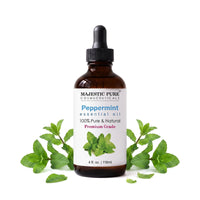
If you've spent any time around essential oils, peppermint oil has probably come up more than once. With over 74,000 people searching for it every month, it's clearly become a staple in a lot of wellness routines. When you look at what it can actually do, that makes sense.
What makes peppermint oil genuinely interesting is the range. It's not a one-trick ingredient. Below are ten peppermint oil benefits worth knowing about, plus how to actually put them to use.
What is Peppermint Essential Oil?
Peppermint comes from a natural cross between spearmint and watermint - the Mentha piperita plant. The oil is extracted through steam distillation, and the main active compound is menthol, responsible for the cooling sensation and most of what makes the oil therapeutically useful.
Majestic Pure Peppermint Essential Oil is 100% pure Mentha piperita oil - independently tested, undiluted, with no fillers or additives. It comes in an amber glass bottle with a dropper, which is the proper way to store essential oils if you want them to stay potent.
Product Link: https://majesticpure.com/products/peppermint-oil
10 peppermint oil benefits and How to Use Them
1. Scalp Stimulation and Hair Growth
This one surprises people. Menthol is a vasodilator - it opens blood vessels and increases circulation when applied topically. On the scalp, that means follicles get better blood flow and more of the nutrients they need.
A 2014 study in Toxicological Research found peppermint oil outperformed minoxidil for hair growth in the test groups, with no adverse effects. That's worth paying attention to.
How to use it: Mix 3 to 5 drops of peppermint oil into a tablespoon of fractionated coconut oil or castor oil. Massage into your scalp for a few minutes, leave for 30 minutes, then wash out. You'll feel the tingle - that's the circulation effect.
2. Tension Headache Relief
This is one of the most well-known peppermint oil benefits, and for good reason. Menthol creates a cooling, mildly analgesic effect on the skin that a lot of people find helpful for tension headaches. It's quick to apply, and the relief often comes fast.
How to use it: Dilute 2 to 3 drops in a small amount of carrier oil. Massage into your temples, across the forehead, and into the base of your neck. Keep it well away from your eyes.
3. Congestion and Stuffed-Up Sinuses
The opening sensation menthol creates in your nasal passages is useful when you're blocked up from a cold or allergies. Diffusing peppermint oil or doing a simple steam inhalation can bring real temporary relief.
How to use it: Add 4 to 6 drops to your diffuser and run it for 30 to 60 minutes. Or put 1 to 2 drops in a bowl of hot water, drape a towel over your head, and breathe slowly for 5 to 10 minutes.
4. Sore Muscles After Training
Peppermint oil turns up in a lot of natural sports recovery products, and for good reason. Applied to the skin, menthol creates a cooling-then-warming sensation that helps dull pain signals from sore, overworked muscles. It's especially good on the neck and shoulders after a long day.
How to use it: Blend 5 to 7 drops into a tablespoon of carrier oil and massage into sore spots using firm, circular motions. Pairing with eucalyptus oil makes for a stronger muscle recovery blend.
5. Mental Focus and Clarity
Multiple studies link inhaling peppermint to improvements in alertness, memory, and reaction time. It's become a go-to for people who need to concentrate without reaching for more caffeine.
How to use it: Run a diffuser with 3 to 4 drops while you work or study. Open the bottle and inhale directly for a quick mental reset. Some people apply a diluted drop to their wrists and breathe it in throughout the day.
6. Afternoon Energy Without the Crash
When that mid-afternoon slump hits, peppermint oil is a genuinely useful tool. The scent is invigorating in a real way - no stimulants, no crash afterwards..
How to use it: Diffuse in the early afternoon or apply a diluted drop to the back of your neck for a cooling energy boost that lasts a while.
7. Stress Relief and Nervous Tension
Peppermint has a reputation as a stimulating oil, but at lower intensities, it's also calming. Blended with lavender essential oil in a diffuser, it can take the edge off a tense day without making you feel sluggish.
Works well paired with: lavender essential oil, rosemary essential oil, eucalyptus oil, cedarwood oil, and lemon for balanced aromatherapy blends.
8. Cooling Itchy or Irritated Skin
Menthol's cooling sensation makes peppermint oil popular for skin that's itchy, overheated, or mildly irritated. A properly diluted application can bring real temporary comfort to insect bites, minor rashes, or general skin discomfort.
How to use it: Mix 3 to 4 drops into a tablespoon of coconut oil or aloe vera gel. Apply gently to the area. Never put undiluted peppermint oil directly on skin.
9. Natural Pest Deterrent
Menthol's strong scent is genuinely unpleasant to a lot of common household pests - ants, spiders, and mice included. Many people use diluted peppermint oil as a chemical-free barrier around entry points.
How to use it: Add 10 to 15 drops to a water-filled spray bottle and apply around window sills, doorways, and baseboards. Reapply every few days. Note: peppermint oil can be toxic to cats, so use it carefully in households with feline pets.
10. Pre-Sleep Diffuser Blend
At lower concentrations alongside calming oils, peppermint can help create a pre-sleep environment that feels both fresh and relaxing. It complements lavender well without competing with it.
How to use it: Try 2 drops of peppermint and 4 drops of lavender essential oil in your diffuser about 30 minutes before bed. Lavender does the relaxation work - peppermint keeps things feeling clean and fresh.
About Majestic Pure Peppermint Essential Oil
Product Link: https://majesticpure.com/products/peppermint-essential-oil-2-fl-oz?_pos=4&_psq=pepper&_ss=e&_v=1.0
When you're applying something to your scalp or diffusing it in your home, purity matters. Adulterated oils are common in the market and won't give you the results above.
• 100% Pure Mentha piperita - no synthetic additions, no diluting agents
• Premium Grade and independently lab tested for purity
• Undiluted - full-strength oil in the bottle
• Amber glass bottle with dropper - UV protection and precise dispensing
• Sourced from quality growing regions worldwide
• Quality guarantee on every bottle
Among high quality essential oils, third-party purity testing is what separates products that actually deliver from ones that just smell right.
Using Peppermint Oil Safely - What You Need to Know
Dilute before you put it on skin. A 1 to 3% dilution - roughly 5 to 15 drops per tablespoon of carrier oil - is right for most uses. Peppermint oil is strong and an undiluted application will cause irritation.
Carrier oil options: Fractionated coconut oil is great for scalp use since it's light and absorbs fast. Castor oil is the stronger option if you're combining peppermint with a hair growth treatment. Jojoba and sweet almond oil work well for general skin and body applications.
Keep it away from the eye area and mucous membranes. Peppermint near your eyes is genuinely uncomfortable. Keep it away from children's faces.
Patch test first. Apply diluted oil to your inner elbow, wait 24 hours, and check for any reaction.
What peppermint oil Blends Well With
• lavender essential oil - calming, sleep support, headache blends
• rosemary essential oil - scalp stimulation and hair growth routines
• eucalyptus oil - respiratory support and muscle recovery
• cedarwood oil - grounding, stress relief, hair care blends
• lemongrass essential oil - uplifting, energising diffuser combinations
• Lemon and orange - bright, focused work-time blends
Frequently Asked Questions
Can I put Peppermint oil directly on my skin?
No - always dilute with a carrier oil first. Direct application causes irritation and can feel quite intense on sensitive skin.
Is Peppermint oil actually useful for hair growth?
Yes. The menthol-driven scalp circulation effect is documented, and the 2014 research comparing it to minoxidil showed meaningful results. Used consistently as a diluted scalp treatment, it's one of the more evidence-backed natural options.