If you've spent any time looking into natural skincare for acne, tea tree oil keeps coming up. And it deserves to. Unlike a lot of ingredients that get hyped online, tea tree oil for acne has a real body of research behind it - multiple clinical studies, a well-understood mechanism, and decades of practical use by dermatologists and natural health practitioners alike.
The tricky part isn't whether it works. It's using it correctly. Get the dilution wrong, and you can irritate your skin more than you help it. This guide covers everything you need to know - how it works, how to dilute it properly, how to use it as a spot treatment, and what to expect for different types of acne, including cystic breakouts and post-acne scarring.
Shop Majestic Pure Tea Tree Essential Oil (4 fl oz): https://majesticpure.com/products/tea-tree-essential-oil-4-fl-oz
Why Tea Tree Oil Works on Acne
Tea tree oil comes from the leaves of Melaleuca alternifolia, a tree native to Australia. The oil is steam distilled and its primary active compound is terpinen-4-ol, which has well-documented antibacterial, antifungal, and anti-inflammatory properties.
Here's why that matters for acne:
• Acne-causing bacteria (Cutibacterium acnes, formerly known as P. acnes) are vulnerable to terpinen-4-ol. Multiple studies have confirmed that tea tree oil inhibits this bacteria effectively.
• Sebum overproduction contributes to clogged pores. Tea tree oil has mild astringent properties that help regulate excess oil on the skin surface.
• Inflammation is what turns a blocked pore into a red, painful pimple. Tea tree oil's anti-inflammatory activity helps reduce the swelling and redness associated with active breakouts.
A frequently cited 1990 study in the Medical Journal of Australia compared 5% tea tree oil gel to 5% benzoyl peroxide for acne treatment. Both produced significant improvements. The benzoyl peroxide group saw faster initial results, but the tea tree oil group had significantly fewer side effects - less dryness, scaling, and irritation. That trade-off is exactly why so many people prefer the natural route.
How to Dilute Tea Tree Oil for Face Use
This is where most people make mistakes. tea tree essential oil is potent. Using it undiluted on your face can cause redness, peeling, and contact dermatitis - none of which helps acne.
The Right Dilution Ratios
• Spot treatment on a single pimple: 1 to 2% dilution (1 to 2 drops tea tree oil per teaspoon of carrier oil)
• Wider face application for acne-prone skin: 1% dilution maximum (1 drop per teaspoon of carrier oil)
• Adding to cleanser or moisturiser: 1 to 2 drops per full pump of product
For how to dilute tea tree oil for face use, the carrier oil you choose matters too. For acne-prone skin:
• Jojoba oil is the gold standard - it's non-comedogenic and closely mimics skin's natural sebum
• fractionated coconut oil absorbs quickly and won't clog pores
• Aloe vera gel also works well and adds soothing properties
Avoid heavy carrier oils like pure coconut oil or olive oil on acne-prone skin - they can block pores and make breakouts worse.
Tea Tree Oil Spot Treatment: Step-by-Step
This is the most common and effective way to use tea tree oil for acne. A targeted spot treatment means you get a higher concentration on the pimple itself without risking broader skin irritation.
1. Cleanse your face thoroughly and pat dry.
2. Mix 1 to 2 drops of Majestic Pure tea tree essential oil with a small amount of jojoba or fractionated coconut oil on a clean fingertip or cotton swab.
3. Apply directly to the pimple only - not to surrounding skin.
4. Leave on. Don't rinse. Apply before bed for best results.
5. In the morning, cleanse as normal.
With tea tree oil pimples overnight treatment, many people notice a visible reduction in redness and swelling by the next morning. Full resolution takes a few days of consistent application, depending on the size and severity of the breakout.
Tea tree oil for cystic acne
Cystic acne sits deeper in the skin than surface pimples - it's a more severe form of acne that develops when blocked pores become infected and inflamed well below the skin surface. These are the large, painful, nodular breakouts that often don't come to a head.
Can tea tree oil for cystic acne help? Yes, with realistic expectations. Because cystic acne is deeper, topical application has limits - the antibacterial compounds need to penetrate further to reach the source. That said:
• The anti-inflammatory effect of tea tree oil can reduce the visible redness and swelling at the surface.
• Consistent use helps prevent new cysts from forming by keeping acne-causing bacteria in check on the skin surface.
• When a cyst does start to come to a head, tea tree oil helps speed the clearing process.
For cystic acne specifically, combine tea tree oil spot treatment with warm compresses on the area (to encourage circulation and drainage) and maintain a consistent, gentle cleansing routine. Persistent cystic acne is worth discussing with a dermatologist regardless of what topical treatment you're using.
Tea Tree Oil Acne Scars: What to Expect
Post-acne hyperpigmentation (the red or brown marks left after a pimple heals) is a different problem than active acne, but tea tree oil can help here too. Its anti-inflammatory and antimicrobial properties support the skin's natural recovery process, which can speed up the fading of marks over time.
For tea tree oil acne scars, a slightly modified approach works best:
• Use a 1% dilution in a carrier oil that supports skin regeneration - rosehip oil or jojoba are good choices
• Apply to the scarred area nightly after cleansing
• Be consistent. Post-acne marks take weeks to months to fade, regardless of what you use - the goal is supporting the process, not rushing it
Tea tree oil works best for fresh post-acne marks rather than older, deeper scars. For raised or pitted scarring (ice pick, boxcar scars), clinical treatments are more effective.
Adding tea tree oil to Your Daily Skincare Routine
In Your Cleanser
Add 1 to 2 drops of Majestic Pure tea tree essential oil to your regular face wash in your palm before applying. This gives you a light antibacterial boost on every wash without the concentrated contact of a spot treatment.
In a Face Mask
Add 2 to 3 drops of tea tree oil to a clay mask (kaolin or bentonite clay both work well). The clay draws out impurities while the tea tree oil contributes antibacterial action. Use once a week.
As a Toner
Add 4 to 5 drops of tea tree oil to 100ml of witch hazel in a spray bottle. Shake before each use and apply to a cotton pad after cleansing. This makes a light, antibacterial toner that's particularly effective for oily or acne-prone skin.
About Majestic Pure tea tree essential oil
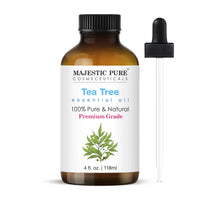
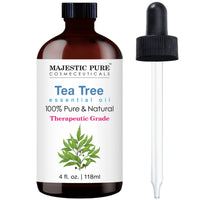
• 100% Pure and Natural Melaleuca alternifolia oil - no fillers, additives, or dilution
• Premium Grade, independently lab tested for purity and terpinen-4-ol content
• Unfiltered and undiluted - therapeutic-grade strength
• Amber glass bottle with precision glass dropper - UV protection, exact dispensing
• Sourced from the best growing regions worldwide
• Ethically sourced and cruelty-free, packaged in the USA
Blends well with: lavender essential oil (soothing, antibacterial), frankincense oil (anti-aging, healing), eucalyptus oil (antimicrobial), rosemary essential oil (circulation support), bergamot essential oil (skin-purifying).
Available in 4 fl oz.
Safety Notes
• Always dilute before applying to skin. Neat tea tree oil on the face causes irritation.
• Patch test on your inner arm before applying to your face. Wait 24 hours.
• Keep away from eyes. If contact occurs, flush with water immediately.
• Not safe for ingestion.
• Use with caution during pregnancy - check with your doctor first.
• Toxic to dogs and cats - keep stored away from pets.
Frequently Asked Questions
How long does tea tree oil take to work on a pimple?
With consistent overnight spot treatment, many people see redness and swelling reduce within 24 to 48 hours. Complete resolution typically takes 3 to 5 days, depending on the size of the breakout.
Can I leave tea tree oil on my face overnight?
Yes, as a diluted spot treatment on individual pimples. Avoid applying to large areas of skin overnight, especially if you have sensitive skin. A 1 to 2% dilution on a specific spot is fine.
How often should I use tea tree oil for acne?
Once daily as a spot treatment, is sufficient for most people. If you're adding it to your cleanser or toner, daily use is also fine. If your skin becomes dry or irritated, reduce frequency to every other day.
Is tea tree oil safe for sensitive skin?
At proper dilution levels, yes. Sensitive skin should start with a 0.5 to 1% dilution and patch test carefully. Higher concentrations are more likely to cause irritation on sensitive skin types.
Can I use tea tree oil with other acne treatments?
Generally, yes, but layer carefully. Using tea tree oil alongside benzoyl peroxide or retinoids at the same time can over-dry the skin. Apply them at different times (e.g., tea tree spot treatment at night, other actives in the morning).
For external use only. Dilute before skin application. Avoid during pregnancy without medical advice. Keep away from children and pets. Results vary.