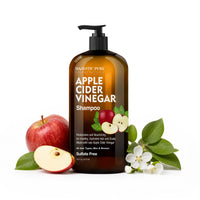
Apple cider vinegar has a long history as a kitchen staple and folk remedy, but over the past decade it's quietly become one of the most talked-about ingredients in hair care. If you've been curious about whether ACV shampoo is worth the hype — or worried about putting vinegar anywhere near your hair — this guide covers everything you actually need to know.
Majestic Pure Apple Cider Vinegar Shampoo delivers the scalp-balancing benefits of ACV in a ready-to-use formula that won't leave your bathroom smelling like a salad dressing. Here's the science behind why it works, who it helps the most, and a few situations where you should proceed with caution.
What Is Apple Cider Vinegar and Why Is It Used in Hair Care?
Apple cider vinegar is made by fermenting crushed apples. The fermentation process produces acetic acid — the compound responsible for vinegar's sharp smell and most of its functional properties. It also contains small amounts of vitamins B and C, trace minerals, and the "mother" (strands of proteins, enzymes, and beneficial bacteria present in raw, unfiltered ACV).
In hair care, what matters most is ACV's pH. Healthy hair has a slightly acidic pH between 4.5 and 5.5. Many shampoos — particularly sulfate-containing ones — are more alkaline, which causes the hair cuticle to swell and lift. Lifted cuticles lead to frizz, tangling, dullness, and moisture loss.
Apple cider vinegar, with a pH of roughly 2–3, helps re-acidify the hair and scalp after washing, sealing the cuticle back down and restoring the protective acid mantle of the scalp.
Apple Cider Vinegar Shampoo Benefits: What the Research Suggests
1. Restores Scalp pH Balance
The scalp's acid mantle is a thin film of sebum, sweat, and natural acids that acts as the skin's first line of defense against bacteria, fungi, and environmental irritants. Disrupting this balance — through harsh shampoos, hard water, or excessive washing — leaves the scalp vulnerable to irritation and microbial overgrowth. ACV's acidic profile helps bring the scalp back toward its natural pH range.
2. Reduces Dandruff and Flaking
One of the most commonly reported ACV shampoo benefits is a reduction in dandruff. The acetic acid in ACV creates an inhospitable environment for Malassezia — the yeast species most commonly associated with dandruff and seborrheic dermatitis. While clinical trials on topical ACV for dandruff are limited, antifungal properties of acetic acid are well-established in the literature, and anecdotal evidence from ACV shampoo users is overwhelmingly positive.
3. Clarifies Product Buildup
Silicones, heavy conditioners, dry shampoo residue, and hard water minerals all deposit on the scalp and hair shaft over time. This buildup makes hair look dull, feel heavy, and can clog follicles. The mild acidity of ACV acts as a natural clarifier, dissolving alkaline residue without the need for harsh surfactants.
4. Smooths and Adds Shine
When the cuticle lies flat, light reflects evenly off the hair surface — which is exactly what creates that mirror-like shine. Using an apple cider vinegar shampoo consistently can produce noticeably shinier hair, particularly in people who've been using high-pH products.
5. Soothes Dry, Itchy Scalp
ACV's anti-inflammatory and antimicrobial properties make it useful for soothing scalp irritation. Many people who use ACV shampoo for dry scalp report reduced itching within the first few washes.
Is ACV Shampoo Good for Hair? The Caveats
Apple cider vinegar shampoo is genuinely beneficial for most hair types, but it's not entirely without risk. Here's what to watch for:
Overuse can damage the cuticle. ACV is acidic — that's the point — but too much of a good thing applies here. Using an undiluted ACV rinse daily, or using a highly concentrated formula too often, can erode the cuticle over time. Formulated ACV shampoos buffer the acidity to safe levels, but even with shampoo, more than 3–4 washes per week is usually unnecessary.
Not ideal for very dry or color-treated hair used daily. If your hair is already moisture-starved or you've recently had a chemical treatment, introduce ACV shampoo gradually — once a week at first — and pair it with a deeply hydrating conditioner.
May sting open wounds or irritated skin. If you have active scalp sores, cuts, or severe eczema flare-ups, skip ACV shampoo until your scalp has healed.
Who Benefits Most From ACV Shampoo?
Based on the benefits above, certain scalp and hair types tend to respond particularly well:
Oily or product-heavy scalps. If your scalp gets greasy quickly, or if you use dry shampoo, styling products, or heat protectants regularly, an ACV shampoo for dandruff and buildup is an excellent fit. The clarifying effect helps reset the scalp between deep cleans.
Dandruff-prone scalps. Using ACV shampoo 2–3 times per week as your primary shampoo can significantly reduce visible flaking over 4–6 weeks.
Normal to combination hair types. People with hair that's not extremely dry and not extremely oily tend to get the most across-the-board benefits — shine, smoothness, scalp comfort — without needing to counteract dryness aggressively.
Hard water areas. Hard water leaves mineral deposits (primarily calcium and magnesium) on the hair that cause roughness, dullness, and scalp buildup. ACV's acidic nature dissolves these deposits far more effectively than regular shampoo.
How to Use Apple Cider Vinegar Shampoo: Step-by-Step
Step 1: Wet hair thoroughly with warm (not hot) water. Hot water opens the cuticle; warm water is enough to hydrate the hair without causing unnecessary damage.
Step 2: Apply a palm-sized amount of ACV shampoo to your scalp — not the ends. Work it in with your fingertips using gentle circular motions for 60–90 seconds. Focus on the hairline, crown, and nape.
Step 3: Leave on for 2–3 minutes. This gives the ACV time to dissolve buildup and interact with the scalp.
Step 4: Rinse thoroughly with cool water. The cooler temperature helps close the cuticle after washing, amplifying the shine effect.
Step 5: Follow with a hydrating conditioner or hair mask, focusing on mid-lengths and ends. The ACV shampoo is designed for the scalp; your lengths still need moisture.
Step 6: For maximum scalp health, alternate between ACV shampoo and your regular shampoo, or use ACV shampoo 2–3 times per week depending on your scalp's oil production.
ACV Shampoo and Scalp Oiling: A Winning Combination
One of the best ways to amplify your ACV shampoo results is to combine it with a pre-wash oil treatment. Apply a nourishing oil blend — like a rosemary and castor oil serum — to your scalp 30–60 minutes before shampooing. The oil feeds the follicles; the ACV shampoo then clarifies without stripping. You get the benefits of both without either product undermining the other.
Frequently Asked Questions
Will apple cider vinegar shampoo lighten my hair?
Undiluted ACV used repeatedly could cause very slight lightening of dark hair over a very long period of time. A properly formulated ACV shampoo is buffered to safe levels and shouldn't cause visible color changes.
Can I use ACV shampoo on colored hair?
Yes, but with caution. Color-treated hair is more porous, so use ACV shampoo no more than once or twice a week and follow with a color-safe conditioner. Avoid using concentrated DIY ACV rinses on freshly dyed hair.
Does ACV shampoo help with hair growth?
Indirectly, yes. A clean, balanced scalp with optimal pH is a better environment for healthy hair growth. ACV shampoo doesn't stimulate follicles directly, but it removes the barriers — buildup, microbial imbalance, inflammation — that can impede growth.
How often should I use ACV shampoo?
2–3 times per week for most scalp types. If you have a very oily scalp, you can use it up to 4 times per week. Very dry or processed hair does better with once or twice weekly use.