Himalayan Salt Scrub Benefits: Detox, Glow & DIY Recipes
If your skin feels dull, rough, or just a little lifeless, it probably needs one thing above everything else: a proper exfoliation. And few ingredients do the job as thoroughly — or as gently — as a himalayan salt scrub. Made from one of the most mineral-rich salts on earth, a himalayan salt body scrub doesn't just buff away dead cells. It replenishes the skin's mineral content, improves circulation, and leaves behind a softness that synthetic scrubs rarely match.
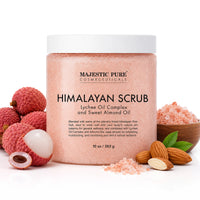
In this guide, we'll cover the full range of himalayan salt scrub benefits, explain what actually makes pink salt different from regular table salt, and share two easy DIY himalayan salt scrub recipes you can make at home. If you'd prefer a ready-made version, Majestic Pure Himalayan Salt Scrub is formulated with pure pink Himalayan salt, nourishing oils, and essential oils for a spa-quality result at home.
What Makes Pink Himalayan Salt Different?
Not all salts are created equal — and when it comes to skin care, that difference matters. Regular table salt is heavily processed, stripped of trace minerals, and often treated with anti-caking agents. Pink himalayan salt comes from ancient sea salt deposits in the Khewra Salt Mine in Pakistan, formed over 250 million years ago before modern pollution existed.
Its distinctive pink colour comes from trace iron oxide content, but the more important distinction is what's inside: pink Himalayan salt contains up to 84 trace minerals including magnesium, potassium, calcium, zinc, and iodide. When used in a scrub, these minerals absorb into the skin during treatment, supporting the skin's natural barrier function and cellular processes.
The crystal structure also matters. Himalayan salt granules have natural irregular edges that provide mechanical exfoliation without the micro-tears that can result from harsher synthetic exfoliants like crushed walnut shell or poorly milled sugar.
Himalayan Salt Scrub Benefits: What It Actually Does for Your Skin
1. Deep Exfoliation Without Over-Stripping
The most immediate salt scrub for skin benefit is exfoliation — and it goes deeper than a standard body wash. Himalayan salt granules physically slough off the outermost layer of dead skin cells (the stratum corneum), unclogging pores and allowing fresher, newer skin to come to the surface. The result is visibly smoother texture, reduced rough patches, and a natural glow that no amount of body lotion can create on its own.
Unlike some acid-based exfoliants that can over-strip or sensitise the skin with frequent use, a well-formulated salt scrub exfoliates and then leaves behind moisturising oils that replenish what the exfoliation process removes. Net result: softer, not dryer, skin.
2. Supports the Body's Natural Detox Process
Himalayan salt scrubs are frequently described as detoxifying — and while the skin doesn't work like a kidney, there's real science behind this claim. The skin is the body's largest organ and plays a legitimate role in waste elimination through sweat. Salt scrubs improve this process in two ways: first, by removing dead skin buildup that can block sweat gland openings; second, through transdermal mineral absorption that supports normal cellular function.
Magnesium in particular — one of the key minerals in pink Himalayan salt — is associated with hundreds of enzymatic processes in the body. Many people are mildly deficient in magnesium, and topical absorption through the skin during a scrub is one route through which levels can be supplemented.
3. Improves Circulation and Skin Tone
Massaging a himalayan salt body scrub into the skin isn't just mechanically exfoliating — the circular massage motions simultaneously stimulate blood circulation in the skin's capillary network. Improved circulation brings more oxygen and nutrients to skin cells, supporting a healthier, more even skin tone over time. This is part of why consistent scrub use is often recommended for areas prone to uneven pigmentation or poor circulation, like the knees, elbows, and lower legs.
4. Balances Skin's Natural Oil Production
It sounds counterintuitive, but regular exfoliation with a salt scrub can actually help regulate sebum production. Clogged pores and a buildup of dead skin force the skin to work harder and produce more oil to compensate. By keeping pores clean and the skin surface clear, a himalayan salt scrub creates the conditions in which the skin can self-regulate more effectively — making it useful for both dry and oily skin types.
5. Relieves Muscle Tension
This benefit often surprises people, but it's rooted in the same principle as Epsom salt baths. When used in a warm shower, a himalayan salt scrub creates a mild hypertonic environment at the skin's surface that helps draw out lactic acid from muscle tissue just beneath. The magnesium content adds to this effect. After a workout or a long day on your feet, a thorough salt scrub treatment leaves muscles feeling noticeably less tense.
2 Easy DIY Himalayan Salt Scrub Recipes
Making your own diy himalayan salt scrub at home is straightforward, inexpensive, and allows you to customise the texture, scent, and skin benefits to exactly what you need. Both recipes below use pure pink Himalayan salt as the base — fine-grain for a gentler scrub, coarse-grain for a more intensive exfoliation.
Recipe 1: Classic Glow Scrub — For Everyday Radiance
This is the most versatile recipe in the lineup — good for all skin types, gentle enough for weekly use, and delivers the smooth, glowing result most people are looking for from a body scrub.
Ingredients
● 1 cup fine-grain pink Himalayan salt
● ½ cup sweet almond oil (or fractionated coconut oil for a lighter feel)
● 1 tablespoon vitamin E oil
● 10 drops lavender essential oil
● 5 drops frankincense essential oil
● Optional: 1 teaspoon dried rose petals for texture and visual appeal
How to Make
1. Combine the Himalayan salt and vitamin E oil in a clean glass jar or mixing bowl.
2. Add sweet almond oil gradually, mixing as you go, until the texture feels like wet sand — not too dry, not soupy.
3. Add essential oil drops and stir well to distribute evenly.
4. Transfer to an airtight glass jar. Stored away from water, this scrub keeps for up to 3 months.
How to Use
In the shower, after wetting your skin, take a small handful and massage in circular motions across your body — starting from the feet and working upward. Focus on rough areas like knees, elbows, heels, and the back of the arms. Leave on for 60 seconds, then rinse thoroughly. Pat skin dry and apply body oil or moisturiser while skin is still slightly damp.
Recipe 2: Energising Detox Scrub — For Dull or Congested Skin
This recipe uses coarser salt granules and a more stimulating essential oil blend — best as a once-weekly intensive treatment when skin needs a proper reset.
Ingredients
● 1 cup coarse-grain pink Himalayan salt
● ¼ cup castor oil
● ¼ cup jojoba oil
● 10 drops peppermint essential oil
● 8 drops lemon essential oil (use at night or apply SPF if going out — lemon oil is photosensitive)
● 5 drops tea tree essential oil
How to Make
1. Mix both carrier oils together first, then combine with the coarse salt.
2. Add essential oil drops and stir thoroughly.
3. Store in a sealed glass container. Use within 6 weeks for best potency of the essential oils.
How to Use
Apply to dry skin before showering for maximum exfoliation effect — the oils penetrate more deeply without the barrier of water. Massage firmly in upward circular motions for 2–3 minutes, then step into the shower and rinse off. The peppermint oil will create a cooling, tingling sensation that signals improved circulation. Follow with a lightweight body lotion.
Note on lemon oil: Lemon essential oil is phototoxic — it can cause skin sensitivity if you go into direct sunlight shortly after application. Use this scrub in an evening shower, or substitute bergamot FCF (furanocoumarin-free) if you plan to go outdoors after.
Tips for Getting the Most From Your Salt Scrub
● Don't scrub on broken or freshly shaved skin. Salt on open skin causes stinging and can introduce irritation. Wait at least 24 hours after shaving before using a salt scrub.
● Use 1–2 times per week maximum. Over-exfoliating damages the skin barrier. Once weekly is ideal for sensitive skin; twice weekly for normal to oily skin types.
● Apply moisturiser immediately after. Freshly exfoliated skin absorbs products far more effectively. Apply body oil or lotion within 2–3 minutes of patting dry to lock in hydration.
● Keep the jar dry. Water in your scrub jar introduces bacteria and shortens shelf life significantly. Use a dry spoon to scoop product rather than wet hands.
Frequently Asked Questions
Can I use a himalayan salt scrub on my face?
It depends on the grain size and your skin's sensitivity. Fine-grain Himalayan salt can be used on the face occasionally for most skin types, but avoid coarse-grain scrubs on facial skin — the granules are too large and can cause micro-tears. If in doubt, use a dedicated facial exfoliant and save your salt scrub for the body.
How often should I use an exfoliating salt scrub?
Once or twice a week is ideal for most people. If you have sensitive or reactive skin, start with once every 10 days and increase frequency only if your skin responds well. Over-exfoliating — more than 3 times per week — can compromise the skin barrier and lead to dryness and irritation.
Is a pink himalayan salt scrub safe for sensitive skin?
Yes, if you use a fine-grain version and a carrier oil base that suits your skin type. Avoid scrubs with synthetic fragrance if your skin is reactive — stick to essential oil-based scenting or unscented formulas. Always do a small patch test on the inner arm before first use.
What's the difference between a salt scrub and a sugar scrub?
Salt granules are harder and more angular, providing deeper mechanical exfoliation — better for rough areas like elbows, heels, and the back of the legs. Sugar granules are softer and dissolve more quickly, making them gentler and better suited for facial skin or sensitive body areas. Salt scrubs are also naturally antiseptic; sugar scrubs tend to be more moisturising.
Can I use a himalayan salt scrub if I have eczema or psoriasis?
Proceed with caution. Salt on inflamed or broken skin causes stinging and can exacerbate flares. During active flare-ups, skip the scrub entirely. During remission, a very fine, oil-rich himalayan salt scrub used gently on unaffected areas may be tolerated well — but always check with a